
The Complete Guide to Lug Nut Torque Specifications and Bolt Patterns
When it comes to automotive maintenance and wheel installation, understanding lug nut torque specifications and bolt patterns is crucial for both safety and performance. At Car-Bolts.com, we provide the most comprehensive database of vehicle specifications, covering over 10,000 different makes, models, and years to ensure you have the exact information you need for your vehicle.
Understanding Lug Nut Torque: The Foundation of Wheel Safety
Lug nut torque, measured in foot-pounds (ft-lb) or Newton-meters (Nm), represents the amount of force applied when tightening wheel nuts. This specification is not arbitrary—it's carefully calculated by automotive engineers to ensure optimal wheel mounting while preventing damage to components. Too little torque can result in loose wheels, while excessive torque can damage threads, warp brake rotors, or even cause wheel failure.
Every vehicle manufacturer provides specific torque values for their vehicles, and these can vary significantly between makes and models. For example, a compact car might require 76-80 ft-lb of torque, while a heavy-duty truck could need 150-180 ft-lb. These differences reflect the varying loads, wheel sizes, and safety requirements of different vehicle types.
Bolt Patterns (PCD): The Key to Wheel Compatibility
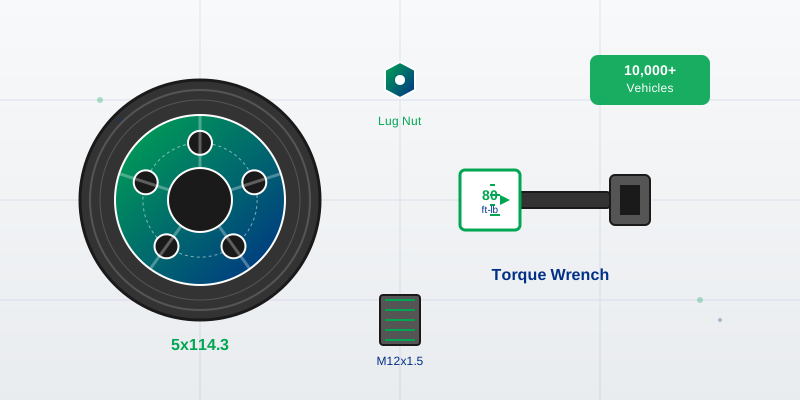
Bolt pattern, also known as Pitch Circle Diameter (PCD), is the diameter of the circle formed by the centers of the wheel bolt holes. This specification is critical for wheel compatibility and is typically expressed as "5x114.3" (5 bolts on a 114.3mm circle) or "6x135" (6 bolts on a 135mm circle). Understanding your vehicle's bolt pattern is essential when purchasing aftermarket wheels or ensuring proper wheel fitment.
Common bolt patterns include 4x100, 5x100, 5x114.3, 5x120, 6x135, and 6x139.7, among others. Each pattern is designed to distribute the vehicle's weight and forces evenly across the wheel mounting surface. Using the wrong bolt pattern can lead to serious safety issues, including wheel detachment, uneven tire wear, and handling problems.
Thread Specifications: The Connection Between Wheel and Hub
Thread specifications, such as M12x1.5 or M14x2.0, indicate the diameter and pitch of the lug nut threads. These specifications must match exactly between the lug nuts and wheel studs to ensure proper engagement and safety. The thread size affects the strength of the connection and the amount of torque that can be safely applied.
Center Bore: Ensuring Proper Wheel Centering
The center bore is the diameter of the hole in the center of the wheel that fits over the hub. This specification ensures the wheel is properly centered on the hub, which is crucial for smooth operation and even tire wear. Center bore measurements typically range from 54mm for compact cars to 87mm for large trucks.
Seat Types: The Interface Between Lug Nut and Wheel
Lug nut seat types determine how the lug nut contacts the wheel. The three main types are conical (tapered), ball (spherical), and flat. Each type requires specific lug nuts and wheel designs to function properly. Conical seats are the most common, providing excellent centering and load distribution.
The Importance of Proper Torque Application
Applying the correct torque to lug nuts is not just about following specifications—it's about ensuring the safety of everyone on the road. Properly torqued lug nuts maintain wheel attachment under all driving conditions, from normal driving to emergency maneuvers.
Tools and Equipment for Proper Torque Application
Using the right tools is essential for proper torque application. A calibrated torque wrench is the most important tool, allowing you to apply the exact torque specified by the manufacturer. Regular calibration of torque wrenches is crucial, as inaccurate tools can lead to over or under-torquing.
Common Mistakes and How to Avoid Them
One of the most common mistakes is using an impact wrench for final tightening. While impact wrenches are excellent for initial tightening, they should never be used for the final torque application. Another common mistake is not re-torquing lug nuts after initial installation.
Seasonal Considerations and Maintenance
Temperature changes can affect lug nut torque, as metal expands and contracts with temperature variations. In extreme climates, it's important to check lug nut torque more frequently, especially after significant temperature changes.
Aftermarket Wheels and Compatibility
When installing aftermarket wheels, it's crucial to ensure compatibility with your vehicle's specifications. This includes matching the bolt pattern, center bore, thread specifications, and seat type. Some aftermarket wheels may require different lug nuts than the original equipment.
Professional vs. DIY: When to Seek Expert Help
While many wheel-related tasks can be performed by knowledgeable DIY enthusiasts, certain situations require professional attention. Professional mechanics have access to specialized tools and equipment, as well as the experience to handle complex situations safely.
Conclusion: Safety Through Knowledge
Understanding lug nut torque specifications and bolt patterns is essential for safe vehicle operation. At Car-Bolts.com, we provide comprehensive, accurate information to help you make informed decisions about wheel maintenance and installation.